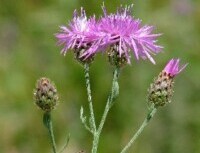
At first glance, a saltcedar shrub looks innocent enough. The ornamental plant has bright, colorful leaves and can grow upwards of 10 feet tall. What many don’t realize is that saltcedar is a feisty, invasive shrub originally found in Central Asia. Saltcedar has no natural predators and thrives in areas where water levels are high.
“The shrub wreaks havoc on native plants and vegetation, especially along riverbeds where water is readily available,” said Walker Billings, supervisor for Sheridan County Weed and Pest District. “A saltcedar shrub can absorb 200 gallons of water per day, which depletes the water supply for other native plants and animal species. In addition, it drops salt on the ground to discourage competition from native plants and vegetation.”
What makes saltcedar difficult to kill is the plant’s tap root, which is a large, long root that grows straight down into the ground. Some tap roots can grow up to 6 inches in diameter, which makes it challenging to cut and treat with herbicides.
The Sheridan County Weed and Pest District has been battling the invasive shrub since 2007 and the campaign continues today along the Powder River. They are currently working south of Arvada heading downriver, starting at the county line where the river flows north from Johnson County into Sheridan County. So far, the project area has covered approximately 10 river miles with ground coverage of 850 acres.
The current project, which started in January and continues through March, uses a cut stump treatment to kill the shrub. Workers use a skid loader with a forestry mulcher to cut down the shrub, then herbicides are precisely applied to the freshly cut surface of the remaining stump. The plant is resilient to herbicides because of the long tap root, so the cut-and-spray approach must be repeated numerous times or the shrub will come back. A blanket spray or boom spray is ineffective – it requires a combination of cutting and spraying to ensure the herbicide is absorbed into the roots, killing the shrub for good.
Winter is an ideal time to battle saltcedar because it limits damage to the ground, which attracts weeds and other non-desirables. The winter season also reduces the chance of workers inconveniencing landowners and hindering hunters during the spring and summer.
“It can take years to fully eradicate a field of saltcedar shrubs,” Billings stated. “It takes a tremendous amount of time and resources to tackle this issue, that’s why we partner with a variety of organizations to share resources and expertise.”
Some of those organizations include: Wyoming Game and Fish, Wyoming Weed and Pest Council, Johnson County Weed and Pest, Clear Creek Conservation District, Sheridan County Conservation District and Bird Conservancy of the Rockies.
One of those organizations, Johnson County Weed and Pest, has been collaborating with Sheridan County Weed and Pest District for years. Both counties share common borders so it’s imperative to work together to tackle the spread.
Under the leadership of retired district supervisor, Rod Litzel, Johnson County Weed and Pest has created one of the most successful saltcedar programs in the state. Since 2007, they have covered 60 air miles, 100 river miles and three tributaries.
“We share a common purpose and that’s the preservation of these wild, open spaces,” said Thane Zickefoose, district supervisor, Johnson County Weed and Pest. “When saltcedar is eradicated, native plants like cottonwoods and willows resurge. We return the land to its natural state for generations to enjoy.”
The Sheridan County Weed and Pest Control District is looking for seasonal help to assist with the saltcedar program as well as other projects throughout the year. Visit scweeds.com to learn more.