In 2012, the Johnson County Natural Habitat Restoration Team was established. This multi-disciplinary team of natural resource experts was assembled to address issues such as invasive annual grasses, fire prevention and restoration, habitat renewal, and more.
The powerhouse team of experts consisted of Pheasants Forever, Natural Resources Conservation Service (NRCS), Bureau of Land Management, Powder River Conservation District, Clear Creek Conservation District, Johnson County Weed and Pest, Wyoming Game and Fish Department, Sheridan Research and Extension Center, and Wyoming Department of Environmental Quality, Abandoned Mine Land Division.
In August 2024, the House Draw Fire hit Johnson County. It was a massive, lightning-ignited wildfire that scorched over 175,000 acres in northern Wyoming. Beginning near Buffalo, it rapidly expanded due to dry conditions and high winds, crossing Interstate 90 and causing significant damage to ranching infrastructure, livestock, and natural habitat.
The fire, which burned for over a week, was fueled by cheatgrass that acted as an accelerant for the wildfire to spread.
After the wildfire subsided, the Johnson County Natural Habitat Restoration Team jumped into action.
“Our team has been working closely for many years, so we were able to move fast and efficiently to protect and restore wildlife habitat and native plants,” said Allen Buff, Supervisor at Johnson County Weed and Pest. “We used GIS input modeling and other technology to help guide and prioritize our work.”
The team used data on cheatgrass as a framework for post-fire mapping. They also used satellite imagery to pinpoint specific areas of cheatgrass that required treatment.
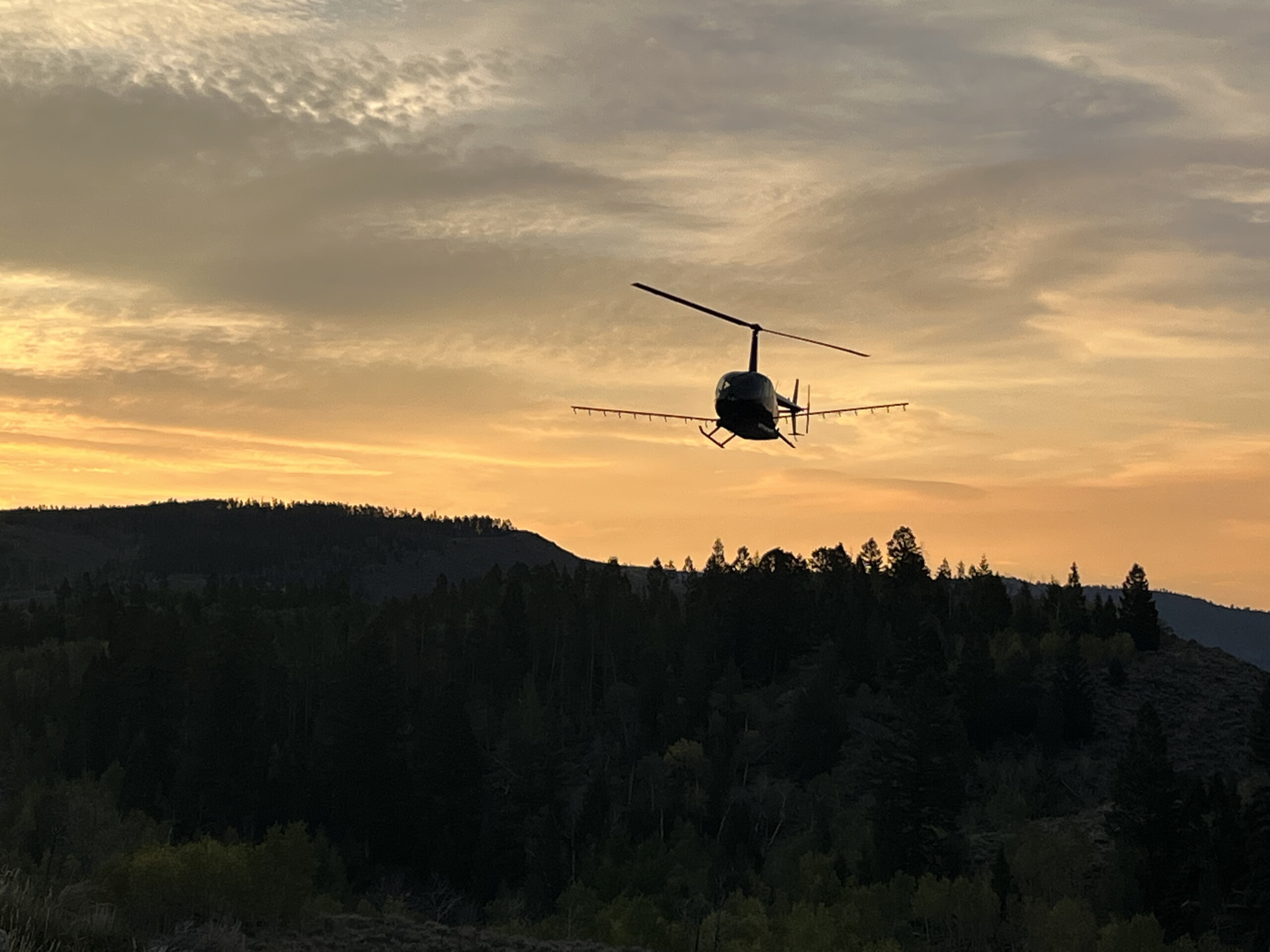
To help fight the battle, the Johnson County Natural Habitat Restoration Team sought funding from the Wyoming Wildlife and Natural Resource Trust. The team received $12.3 million to fund a wide variety of critical projects, including the treatment of invasive annual grasses inside and outside the fire line, reseeding the fire line, creating sage grouse nesting habitat and adding Z-dykes to slow erosion. The team also brought in a helicopter and fixed-wing aircraft for aerial spraying of highly targeted areas. The team sprayed more than 100,000 acres.
“You’re flying blind when you don’t have data and technology to fight these weeds,” Buff stated. “Technology allows us to be more efficient, effective and results-oriented when dealing with invasive weeds like cheatgrass.”
“It took a complete team effort from multiple counties, government agencies and academia to tackle this massive challenge,” said Zach Byram, District Manager for Clear Creek Conservation District. “And the work continues today. We need to be proactive, so these weeds don’t choke out native plants and destroy our natural habitat. That would be devastating for producers, recreationists and other industries in our state. In addition, we need to be proactive to prevent the spread of future wildfires.”
Byram continued, “I highly encourage other counties to assemble a team of conservation experts who can collaborate and share best practices. Having a proactive plan in place will help you move faster while creating better outcomes.”
People are encouraged to read the white paper, “Invasive Weeds and the Cost to Wyoming,” to gain a deeper understanding about Weed & Pest Districts and the critical role they play in being the first line of defense in protecting agricultural producers, land owners and the economy from devastating loss.
About the Wyoming Weed & Pest Council
Wyoming Weed and Pest Council (WWPC) is comprised of 23 Weed & Pest Districts in the state of Wyoming. The Council works closely with the Wyoming Department of Agriculture and the University of Wyoming to keep current with the latest technology and research available in the ongoing management of noxious weeds and pests. The overall mission is to provide unified support and leadership for the integrated management of noxious weeds and pests to protect economic and ecological resources in the state.
For more information about WWPC, visit wyoweed.org